
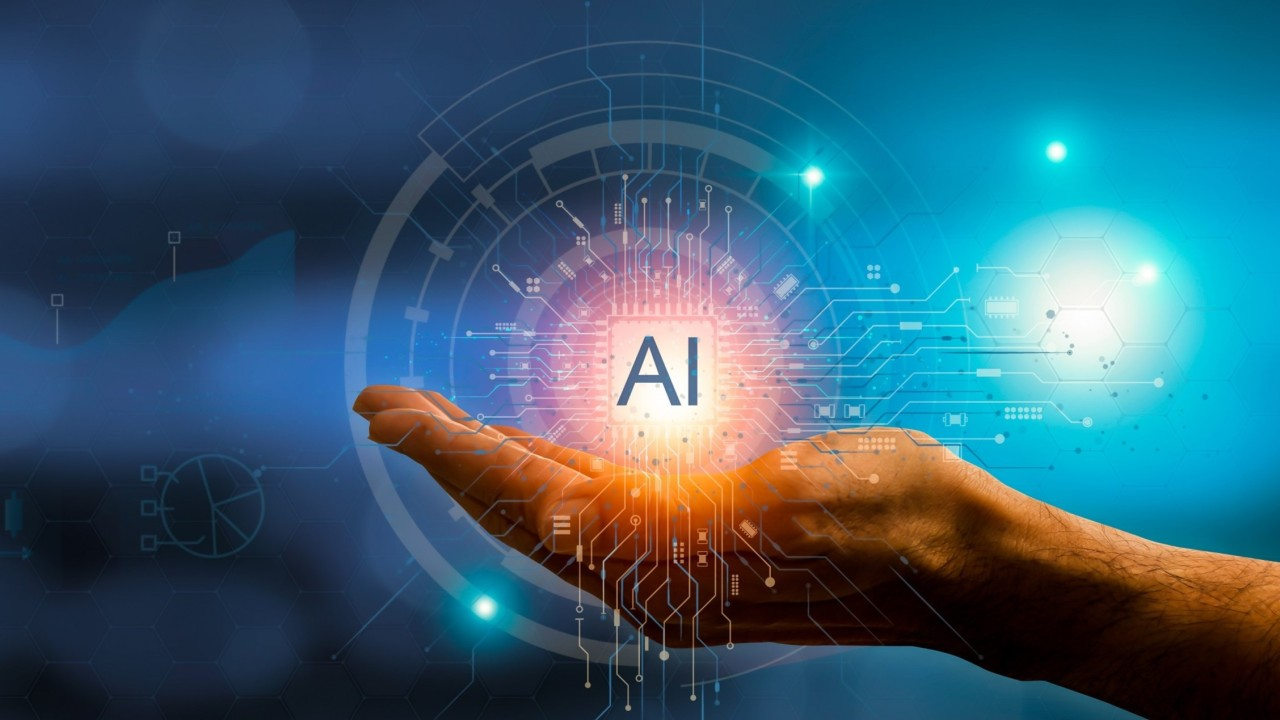
Beyond Imagination: In the 21st century, humanity stands at the intersection of imagination and reality. Technologies that once belonged to science fiction—intelligent machines, predictive algorithms, and automated systems—are now part of everyday life. At the center of this transformation lies Artificial Intelligence (AI), a revolutionary field reshaping how we interact with knowledge, creativity, and discovery.

But beyond its technical capabilities, AI is also revealing something deeper about us: our relationship with science and innovation. From assisting researchers in groundbreaking studies to transforming education, medicine, and communication, AI acts as both a tool and a mirror reflecting humanity’s curiosity, ambition, and evolving understanding of the future.
This article explores how artificial intelligence provides insights into the way humans engage with science, how it influences innovation, and what it tells us about the future of knowledge and discovery.
The Rise of Artificial Intelligence in Modern Science
The rapid rise of artificial intelligence has changed the landscape of scientific research. Machines are no longer just tools used to perform calculations; they have become collaborators capable of analyzing enormous datasets and discovering patterns that humans might miss.
From Simple Automation to Intelligent Systems
Early computing systems were designed primarily for automation—performing repetitive tasks with speed and accuracy. However, advances in machine learning have enabled computers to learn from data and improve their performance over time.
Key developments in AI include:
- Machine learning algorithms that detect patterns in complex datasets
- Neural networks inspired by the structure of the human brain
- Natural language processing systems capable of understanding human language
- Predictive models that simulate real-world scenarios
These technologies allow researchers to explore scientific questions with unprecedented depth and speed.
AI as a Scientific Partner

Rather than replacing scientists, AI increasingly acts as a partner in discovery. For example, researchers use AI to:
- Analyze astronomical data from telescopes
- Predict protein structures in biological research
- Model climate patterns and environmental changes
- Accelerate drug discovery and medical diagnostics
In many cases, AI helps scientists move from hypothesis to discovery far more quickly than traditional methods allow.
How AI Reflects Humanity’s Curiosity
Science has always been driven by curiosity—the desire to understand the world and uncover hidden truths. AI amplifies this curiosity by enabling researchers to ask more complex questions and explore deeper layers of knowledge.
Expanding the Boundaries of Knowledge
Artificial intelligence allows scientists to analyze data at a scale that was previously unimaginable. For example, AI systems can process millions of research papers, experiments, and observations within minutes.
This capability expands the boundaries of what humans can learn.
Instead of spending years collecting and analyzing data manually, researchers can now focus on interpreting insights and developing innovative ideas.
Turning Data Into Discovery
Modern science generates massive amounts of data every day—from satellite images and genetic sequences to particle physics experiments. Without AI, much of this information would remain unused or overlooked.
AI algorithms transform raw data into meaningful discoveries by identifying relationships and trends that may not be immediately obvious to human observers.
The Human–Machine Collaboration in Innovation
One of the most fascinating aspects of AI is the collaboration between human intelligence and machine intelligence. Innovation rarely happens in isolation; it emerges from the interaction of ideas, technologies, and people.
Complementary Strengths
Humans and AI possess different strengths that complement each other.
Human strengths include:
- Creativity and imagination
- Ethical reasoning
- Contextual understanding
- Emotional intelligence
AI strengths include:
- Processing massive datasets
- Recognizing subtle patterns
- Performing complex calculations
- Operating continuously without fatigue
Together, these capabilities create powerful opportunities for innovation.
Examples of Collaborative Innovation
Human-AI collaboration is already transforming many industries:
- In medicine, AI helps doctors detect diseases earlier and more accurately.
- In engineering, AI assists in designing efficient structures and materials.
- In environmental science, AI models climate change scenarios to guide global policy decisions.
These collaborations demonstrate that the future of innovation lies not in replacing human intelligence but in enhancing it.
AI and the Acceleration of Scientific Discovery
Scientific progress traditionally unfolds over decades of experimentation and observation. However, AI is dramatically accelerating the pace of discovery.
Faster Research Cycles
AI tools can analyze experimental data almost instantly, allowing researchers to test hypotheses more quickly.
This accelerated process means:
- Faster breakthroughs in medicine and technology
- Reduced costs for scientific research
- More rapid solutions to global challenges
For example, during global health crises, AI systems can analyze medical data to identify potential treatments and vaccines in a fraction of the time required by traditional research methods.
Predictive Science
Another powerful feature of AI is its ability to predict outcomes.
Using predictive models, scientists can simulate complex systems such as:
- Climate change
- Disease outbreaks
- Urban development
- Ecosystem dynamics
These simulations help researchers anticipate future scenarios and develop proactive strategies.
What AI Reveals About Society’s Trust in Science
The rise of artificial intelligence also highlights how society perceives and trusts scientific knowledge.
Technology as a Symbol of Progress
Throughout history, technological innovation has symbolized human progress. AI continues this tradition, representing the cutting edge of scientific advancement.
People often view AI-driven discoveries as highly credible because they rely on data-driven analysis rather than subjective interpretation.
Ethical and Social Questions
However, the growth of AI also raises important ethical questions.
These include concerns about:
- Data privacy and surveillance
- Algorithmic bias
- Transparency in decision-making
- The impact of automation on jobs
These discussions reveal that society values not only innovation but also responsibility and accountability in scientific development.
AI’s Influence on Education and Learning
Education is another area where artificial intelligence is reshaping our relationship with science and innovation.
Personalized Learning
AI-powered educational tools can analyze a student’s learning style and progress to create personalized learning experiences.
Benefits include:
- Adaptive learning platforms tailored to individual needs
- Automated feedback on assignments
- Intelligent tutoring systems that guide students through complex topics
These technologies help make scientific education more accessible and engaging.
Democratizing Knowledge
AI also contributes to the global spread of knowledge.
Digital platforms powered by AI enable people worldwide to access scientific information, research papers, and educational resources.
This democratization of knowledge allows individuals from diverse backgrounds to participate in scientific innovation.
The Role of AI in Solving Global Challenges
Humanity faces numerous global challenges, including climate change, health crises, and resource management.
AI is increasingly being used to address these issues.
Climate Science and Environmental Protection
Scientists use AI to monitor environmental changes and develop strategies for sustainability.
Applications include:
- Analyzing satellite imagery to track deforestation
- Predicting extreme weather events
- Optimizing renewable energy systems
These innovations help governments and organizations make informed decisions about protecting the planet.
Healthcare and Medical Breakthroughs
AI is also transforming healthcare by improving diagnostics, treatment planning, and medical research.
Examples include:
- AI-assisted medical imaging
- Early detection of diseases such as cancer
- Development of new pharmaceuticals
These advancements demonstrate how technology can directly improve human well-being.
The Philosophical Questions Raised by AI
Beyond practical applications, AI also raises profound philosophical questions about knowledge, intelligence, and the nature of discovery.
What Does It Mean to Understand?
When AI systems generate scientific insights, it challenges traditional ideas about understanding.
Does the machine truly “understand” the data, or is it simply performing complex calculations?
This debate highlights the difference between computational intelligence and human comprehension.
The Nature of Creativity
Another question concerns creativity. AI systems are now capable of generating art, music, and scientific hypotheses.
This raises an intriguing possibility: that creativity may not be limited solely to human minds but can emerge from interactions between humans and machines.
The Future of AI and Scientific Innovation
As artificial intelligence continues to evolve, its influence on science and innovation will only grow.
Emerging Technologies
Several emerging technologies are expected to shape the future of AI-driven research, including:
- Quantum computing
- Advanced neural networks
- Autonomous research laboratories
- AI-assisted engineering systems
These innovations could lead to discoveries that are currently beyond human imagination.
A New Era of Exploration
The combination of human curiosity and machine intelligence may usher in a new era of exploration.
Fields such as space science, biotechnology, and materials engineering may experience unprecedented breakthroughs as AI helps scientists analyze complex systems and generate novel ideas.
Balancing Innovation With Responsibility
While AI offers tremendous opportunities, it also requires careful governance and ethical oversight.
Scientists, policymakers, and technology companies must work together to ensure that AI development aligns with human values.
Key principles include:
- Transparency in AI systems
- Fair and unbiased algorithms
- Responsible data usage
- International cooperation in technology governance
By addressing these concerns, society can harness the power of AI while minimizing potential risks.
Conclusion: Words From the Future
Artificial intelligence is more than just a technological breakthrough—it is a reflection of humanity’s enduring quest for knowledge and innovation.
Through AI, we gain not only powerful tools for scientific discovery but also insights into how humans think, learn, and explore the unknown.
The partnership between human curiosity and machine intelligence is shaping a future where science advances faster than ever before.
Yet the most important lesson revealed by AI may be this: technology does not replace human ingenuity—it amplifies it.
As we continue to explore new frontiers of knowledge, the “words from the future” spoken by artificial intelligence remind us that innovation is ultimately a human story—one driven by imagination, collaboration, and the relentless pursuit of understanding.
FAQs
1. What does AI reveal about our relationship with science and innovation?
AI shows that humans are curious, inventive, and eager to explore complex problems. It amplifies our ability to analyze data, discover patterns, and accelerate innovation, reflecting both our creativity and reliance on technology.
2. How is AI changing the way scientific research is conducted?
AI accelerates research by analyzing massive datasets, predicting outcomes, and identifying trends that may be difficult for humans to detect. It assists in fields like medicine, climate science, space exploration, and materials engineering.
3. Does AI replace human scientists?
No. AI acts as a collaborative tool that complements human intelligence. While it handles data processing and pattern recognition, humans provide creativity, context, ethical reasoning, and critical interpretation.











Leave a Comment