Introduction: Europe’s Military Divide
Battle of the Titans: In a pivotal moment for European defence strategy, Germany and France are taking drastically different approaches to modernizing their armies, particularly in the realm of tank warfare. While both countries are key NATO members and share a commitment to collective security, their strategic priorities reflect unique national doctrines, operational needs, and industrial policies.
This article explores the contrasting approaches, the reasons behind these decisions, the implications for European security, and the potential long-term consequences for NATO and global military balance.
France’s Focus: Modernization and Technological Dominance
A High-Tech Armoured Approach
France is prioritizing advanced, next-generation armoured vehicles, with a focus on:
- Leclerc Main Battle Tank upgrades with improved firepower and protection
- Integration of digital battlefield management systems
- Emphasis on networked warfare and precision targeting
The French strategy emphasizes quality over quantity, investing in smaller numbers of highly capable vehicles with superior mobility and technology.
Modular and Multi-Role Capabilities
French armoured vehicles are designed to:
- Serve multiple battlefield roles, from reconnaissance to infantry support
- Integrate seamlessly with air and artillery assets
- Adapt quickly to changing operational environments
Industrial and Economic Impact
- France’s domestic defence industry benefits from high-tech R&D and exports
- Partnerships with European allies for co-development and interoperability
- Focus on maintaining technological edge in the global armoured vehicle market
Germany’s Path: Mass Production and Standardization
Emphasis on Quantity and Standardization
Germany is taking a different approach, focusing on large-scale procurement and standardized systems, including:
- Leopard 2 Main Battle Tanks modernization
- Increased production to ensure fleet numbers meet NATO requirements
- Standardization across multiple units to simplify logistics and maintenance
The German strategy prioritizes fleet readiness and rapid deployment over cutting-edge technological integration.
Operational Doctrine
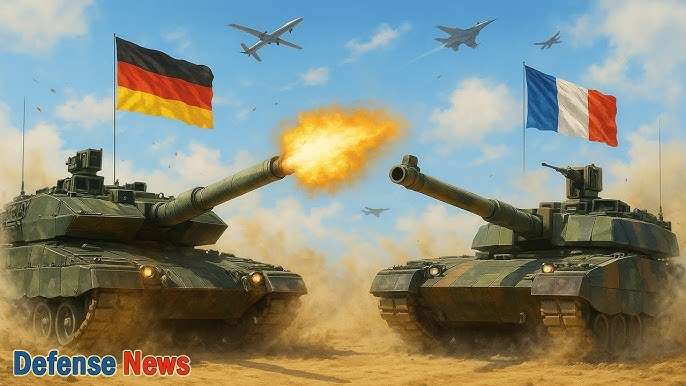
Germany’s doctrine emphasizes:
- Sustained operations in large-scale European conflicts
- Integration with NATO allies in conventional warfare scenarios
- Maintenance of heavy armoured forces for deterrence and territorial defence
Industrial and Economic Impact
- Large-scale production supports German defence manufacturers and job creation
- Strengthens Germany’s role as a major European supplier of armoured vehicles
- Encourages collaboration with NATO allies on logistical and maintenance frameworks
Diverging Philosophies: Quality vs. Quantity
| Aspect | France | Germany |
|---|---|---|
| Main Battle Tank | Leclerc (upgraded, technologically advanced) | Leopard 2 (modernized, mass-produced) |
| Strategy | High-tech, quality over quantity | Standardized, quantity over tech |
| Doctrine | Networked, multi-role capabilities | Large-scale conventional operations |
| Industrial Focus | R&D and exports | Production scale and NATO support |
| Operational Priority | Precision and mobility | Readiness and numerical advantage |
Why the Divergence?
Political Factors
- France seeks strategic autonomy in military operations
- Germany emphasizes NATO integration and collective European defence
- National defense budgets and political priorities influence procurement decisions
Strategic Considerations
- France faces potential threats requiring rapid, flexible deployment
- Germany focuses on deterrence and maintaining a numerically superior armoured force
Industrial Capabilities
- France invests heavily in high-tech R&D, leveraging domestic innovation
- Germany leverages its industrial capacity for mass production and standardization
Implications for NATO and European Security
Operational Interoperability
- Divergent approaches require careful planning to ensure joint operations remain effective
- Standardization differences could complicate logistics, maintenance, and supply chains
Strategic Signaling
- France’s investment signals a focus on precision and advanced warfare
- Germany’s approach signals a commitment to large-scale deterrence and conventional power
Alliance Dynamics
- NATO must accommodate both philosophies in collective defence plans
- Divergence may spur debate on Europe’s future military posture and procurement harmonization
Tank Warfare in the Modern Era
Technological Trends
- Advanced targeting and fire control systems
- Active protection systems to intercept incoming projectiles
- Digital integration with drones, reconnaissance, and battlefield networks
Tactical Evolution
- French doctrine favors rapid strikes, mobility, and networked precision
- German doctrine emphasizes armoured thrusts, mass formations, and sustained firepower
Challenges and Opportunities
- France can leverage fewer, high-tech units for asymmetric advantages
- Germany can provide robust, ready-to-deploy forces for high-intensity scenarios
Expert Opinions
- Defense Analyst Dr. Pierre Leclerc: “France is betting on technology and flexibility. Fewer tanks, but each one is a force multiplier.”
- German Military Strategist Klaus Reinhardt: “Numbers matter in conventional warfare. Germany’s approach ensures NATO has sufficient armoured strength to deter large-scale threats.”
- European Security Consultant Maria Weber: “The divergence reflects national doctrine, industrial priorities, and political culture. Both strategies have merits depending on the scenario.”
Industrial and Economic Implications
France
- High R&D investment strengthens tech sector
- Export potential for advanced armoured systems
- Creates specialized jobs and promotes innovation
Germany
- Mass production supports domestic manufacturers
- Job creation in assembly, logistics, and maintenance
- Enhances Germany’s role as a NATO supplier and partner
Lessons for European Defence Policy
- Diversity in doctrine can enhance alliance flexibility but complicates standardization
- Balancing high-tech units with mass-production capabilities is key
- Coordination between France and Germany is critical for NATO readiness
- Investment in both quality and quantity ensures Europe can respond to varied threats
Future Prospects
Technological Integration
- Both nations will likely continue integrating AI, autonomous systems, and advanced sensors into tanks
- Future conflicts may reward networked, precision-focused warfare, aligning with French doctrine
- Germany’s emphasis on mass-standardized forces ensures resilience and sustained operations
NATO Collaboration
- Joint exercises and interoperability programs will help reconcile different approaches
- Harmonizing logistics and supply chains is essential for effective coalition operations
Strategic Balance
- France’s high-tech tanks could dominate rapid engagements
- Germany’s massed armoured units provide deterrence against large-scale invasions
- Combined, they enhance Europe’s overall military capability
Conclusion: Divergent Paths, Complementary Strengths
Germany and France are pursuing sharply different approaches to tank warfare and army modernization. France prioritizes technological superiority, flexibility, and multi-role capabilities, while Germany emphasizes mass, standardization, and NATO-aligned readiness.
While the divergence presents challenges for interoperability, it also diversifies Europe’s military capability, allowing the continent to respond to both rapid, high-tech engagements and large-scale conventional threats.
This strategic split reflects national priorities, industrial capabilities, and operational doctrines, demonstrating that European defence is not monolithic but a combination of complementary approaches that together strengthen NATO’s overall readiness.
FAQs
1. How are France and Germany’s approaches to tank warfare different?
France prioritizes high-tech, multi-role tanks like upgraded Leclercs with advanced sensors, precision targeting, and networked capabilities, while Germany emphasizes mass production, standardization, and large-scale Leopard 2 fleets for conventional operations.
2. Why is France focusing on fewer but technologically advanced tanks?
France’s strategy values quality over quantity, allowing for rapid deployment, battlefield flexibility, and integration with modern digital warfare systems. This approach maximizes each tank’s effectiveness as a force multiplier.
3. Why is Germany prioritizing mass production and standardization?
Germany emphasizes fleet readiness and numerical advantage to ensure sustained operations in large-scale European conflicts and maintain NATO interoperability across allied forces.





Leave a Comment