
Introduction
Silent Ocean Power Play: In an unexpected move that has sparked global debate, China reportedly mobilised more than 1,400 fishing boats to construct what analysts describe as a 200-mile artificial barrier at sea. The operation was carried out quietly, without major public announcements, leaving many regional observers and geopolitical experts surprised by both its scale and coordination.
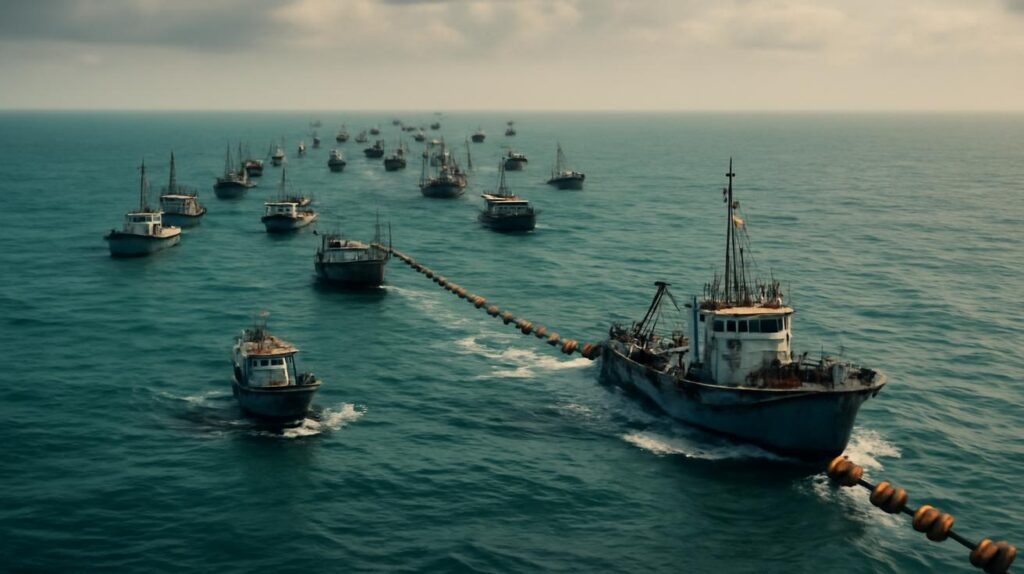
This development highlights the growing use of maritime militia tactics, where civilian vessels—often fishing boats—are strategically deployed to advance national interests at sea. While such tactics are not entirely new, the sheer number of vessels involved and the apparent goal of creating a large maritime barrier has raised serious questions about regional security, international law, and maritime sovereignty.
In this article, we explore how China allegedly mobilised 1,400 fishing boats, why the barrier matters, and what it means for the future of maritime disputes and global geopolitics.
The Unprecedented Maritime Mobilisation
Reports suggest that China coordinated the movement of approximately 1,400 fishing vessels in a highly organised maritime operation. These boats were not just ordinary fishing vessels but part of what many experts call China’s “maritime militia.”
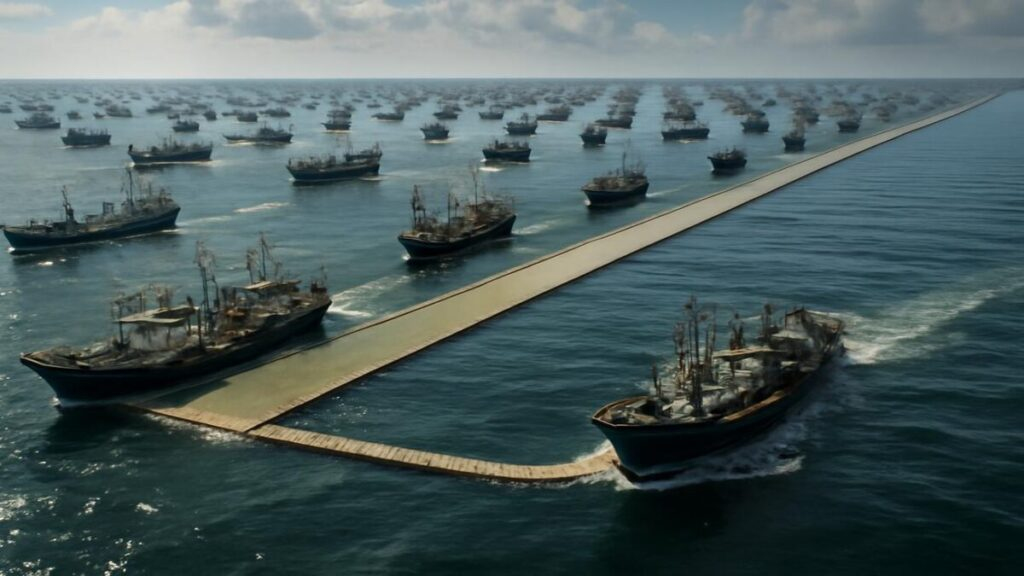
The vessels were deployed in large formations, creating a continuous line across roughly 200 miles of sea, effectively forming a barrier that could restrict movement in the surrounding waters.
Key Characteristics of the Operation
- Mass deployment: Over 1,400 boats were involved.
- Strategic positioning: Vessels formed a long, coordinated line.
- Low-profile approach: The operation took place quietly without major announcements.
- Dual-use vessels: Fishing boats capable of supporting state objectives.
Satellite imagery and maritime tracking data reportedly revealed how the vessels were positioned with remarkable precision, indicating a high level of coordination and planning.
What Is a Maritime Militia?
To understand this operation, it’s essential to understand the concept of a maritime militia.
A maritime militia consists of civilian fishing vessels and crews that can be mobilised by the state for strategic missions at sea. These missions may include:
- Surveillance
- Territorial presence
- Blocking rival vessels
- Supporting coast guard operations
- Constructing temporary maritime barriers
China has been widely reported to maintain one of the largest maritime militias in the world. These fleets allow Beijing to assert influence in disputed waters without directly deploying naval warships.
This approach offers a strategic advantage: actions by fishing vessels often fall into a legal gray zone, making it difficult for other countries to respond without escalating tensions.
The Purpose of the 200-Mile Artificial Barrier
The creation of a 200-mile artificial barrier raises several questions about its purpose.
While official statements remain limited, analysts believe the barrier may serve multiple strategic objectives.
1. Strengthening Maritime Claims
China has long asserted broad territorial claims in nearby waters. A large-scale deployment of fishing boats can reinforce these claims by demonstrating continuous presence and control.
2. Restricting Access
By forming a dense line of vessels, the barrier could discourage or physically prevent other ships from entering certain areas, including rival fishing fleets or research vessels.
3. Monitoring Foreign Activity
Large groups of fishing vessels can function as a distributed surveillance network, allowing authorities to track movements of foreign ships in the region.
4. Supporting Infrastructure Projects
Such maritime formations may also support the construction or protection of artificial islands, energy exploration sites, or underwater installations.
Why the World Was Caught Off Guard
One of the most striking aspects of this operation is that few observers predicted it beforehand.
Several factors contributed to the surprise.
Quiet Coordination
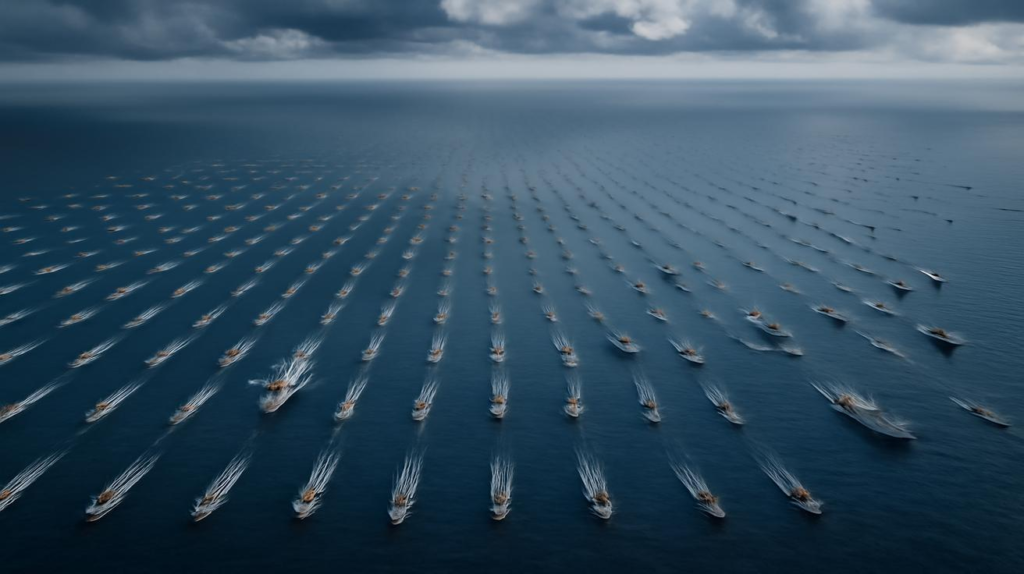
Rather than deploying naval vessels, China used civilian fishing fleets, which are common throughout the region and attract less attention.
Gradual Assembly
The vessels reportedly gathered in stages, making the overall operation harder to detect until the formation was already in place.
Ambiguity of Intent
Fishing vessels can always claim to be engaged in normal fishing activities, making it difficult to prove strategic intent in the early stages.
The Role of Satellite Monitoring
Modern satellite technology played a crucial role in identifying the scale of the operation.
Commercial satellite imagery, combined with Automatic Identification System (AIS) tracking data, allowed analysts to detect unusual patterns of vessel movement.
Researchers noticed:
- Large clusters of boats appearing simultaneously
- Unusual positioning patterns
- Limited signs of active fishing activity
These indicators suggested the vessels were performing coordinated tasks rather than ordinary fishing.
Strategic Implications for Regional Security
The creation of a massive maritime barrier could significantly influence the security dynamics of nearby waters.
Increased Tensions
Neighboring countries may see the barrier as an attempt to expand influence or restrict access to shared maritime resources.
Risk of Maritime Incidents
Large concentrations of vessels increase the chances of collisions, confrontations, or misunderstandings between different fleets.
Escalation Challenges
Responding to civilian vessels is complicated. Naval forces confronting fishing boats could be viewed as excessive force, creating diplomatic risks.
Impact on Fishing Communities
The mobilisation of such a large fishing fleet also raises questions about its effect on local fishing communities.
Some fishermen may participate voluntarily due to:
- Government incentives
- Fuel subsidies
- Access to fishing permits
However, large-scale deployments can also disrupt normal fishing operations and potentially affect regional fish stocks.
Neighboring countries have previously complained that massive fleets reduce available resources in disputed waters.
Legal Questions Under International Maritime Law
The situation also raises complex legal questions under the United Nations Convention on the Law of the Sea (UNCLOS).
Key issues include:
Freedom of Navigation
International law protects the right of ships to move freely through international waters. A large vessel barrier could challenge this principle.
Sovereignty Disputes
If the barrier lies in contested waters, other countries may argue that it represents an unlawful assertion of territorial control.
Civilian vs. Military Status
Because fishing boats are technically civilian vessels, determining whether they are acting as state actors can be legally complicated.
A Growing Pattern of Maritime Strategy
This operation appears to fit into a broader pattern of non-traditional maritime strategy.
Instead of relying solely on naval power, China increasingly uses:
- Coast guard vessels
- Fishing fleets
- Artificial island construction
- Maritime law enforcement
These tools allow the country to gradually expand influence without triggering direct military conflict.
Many analysts describe this approach as “gray-zone tactics”, where actions remain below the threshold of war but still change realities on the ground—or in this case, at sea.
How Other Countries Might Respond
Countries affected by the barrier could respond in several ways.
Diplomatic Protests
Governments may issue formal complaints or raise the issue in international forums.
Increased Patrols
Coast guards and navies may increase patrols to maintain presence in disputed waters.
International Alliances
Regional partnerships and security agreements may strengthen as countries seek collective responses.
Legal Challenges
Some states may bring disputes to international arbitration or legal bodies to contest maritime claims.
The Bigger Picture: Control of Strategic Waters
Control of key maritime areas has long been a central part of global geopolitics.
Oceans serve as:
- Major trade routes
- Sources of energy and natural resources
- Strategic military corridors
By deploying a large fleet to form an artificial barrier, China may be demonstrating a new method of asserting influence over critical sea lanes.
Future Implications
If the tactic proves effective, it could inspire similar strategies elsewhere.
Potential future developments may include:
- Larger maritime militia deployments
- More frequent use of fishing fleets in strategic operations
- Increased satellite monitoring of fishing activity worldwide
This trend could blur the line between civilian maritime activity and state-directed operations.
Conclusion
The reported mobilisation of 1,400 fishing boats to form a 200-mile artificial barrier represents one of the most unusual maritime operations in recent years. By leveraging civilian vessels instead of warships, China appears to have demonstrated a powerful new tool in modern maritime strategy.
Whether the barrier proves temporary or becomes a long-term presence, it has already sparked important discussions about maritime security, international law, and the evolving nature of geopolitical competition at sea.
As global powers continue to compete for influence across strategic waters, operations like this could become increasingly common, reshaping how nations project power without firing a single shot.
FAQs
1. Why did China mobilise 1,400 fishing boats?
China reportedly mobilised around 1,400 fishing vessels as part of a coordinated maritime operation to form a large artificial barrier at sea. Analysts believe the goal may include strengthening territorial presence, monitoring nearby waters, and restricting access to strategic maritime areas.
2. What is the 200-mile artificial barrier?
The 200-mile artificial barrier refers to a long formation of fishing boats positioned across a large stretch of ocean. By placing vessels in a continuous or semi-continuous line, the fleet can create a physical and symbolic barrier that discourages other ships from entering certain waters.
3. Where was the fishing boat barrier created?
Reports suggest the operation took place in waters linked to ongoing territorial disputes, most often discussed in relation to the South China Sea region, where several countries claim overlapping maritime zones.








Leave a Comment